


A town shaped by its streets
Why are Strokestown’s streets so broad? Stand at the Bawn gates and the question almost asks itself. The space is part of the town’s identity, but its history reaches beyond an impressive approach to a country house. It is also a story of market trading, working people and the relationship between an estate and the community outside its walls.
The town’s 2025 heritage regeneration plan provides a useful starting point. Read alongside nineteenth-century descriptions and the Strokestown Park archive, it allows us to look past the familiar postcard and ask what the streets were actually for.
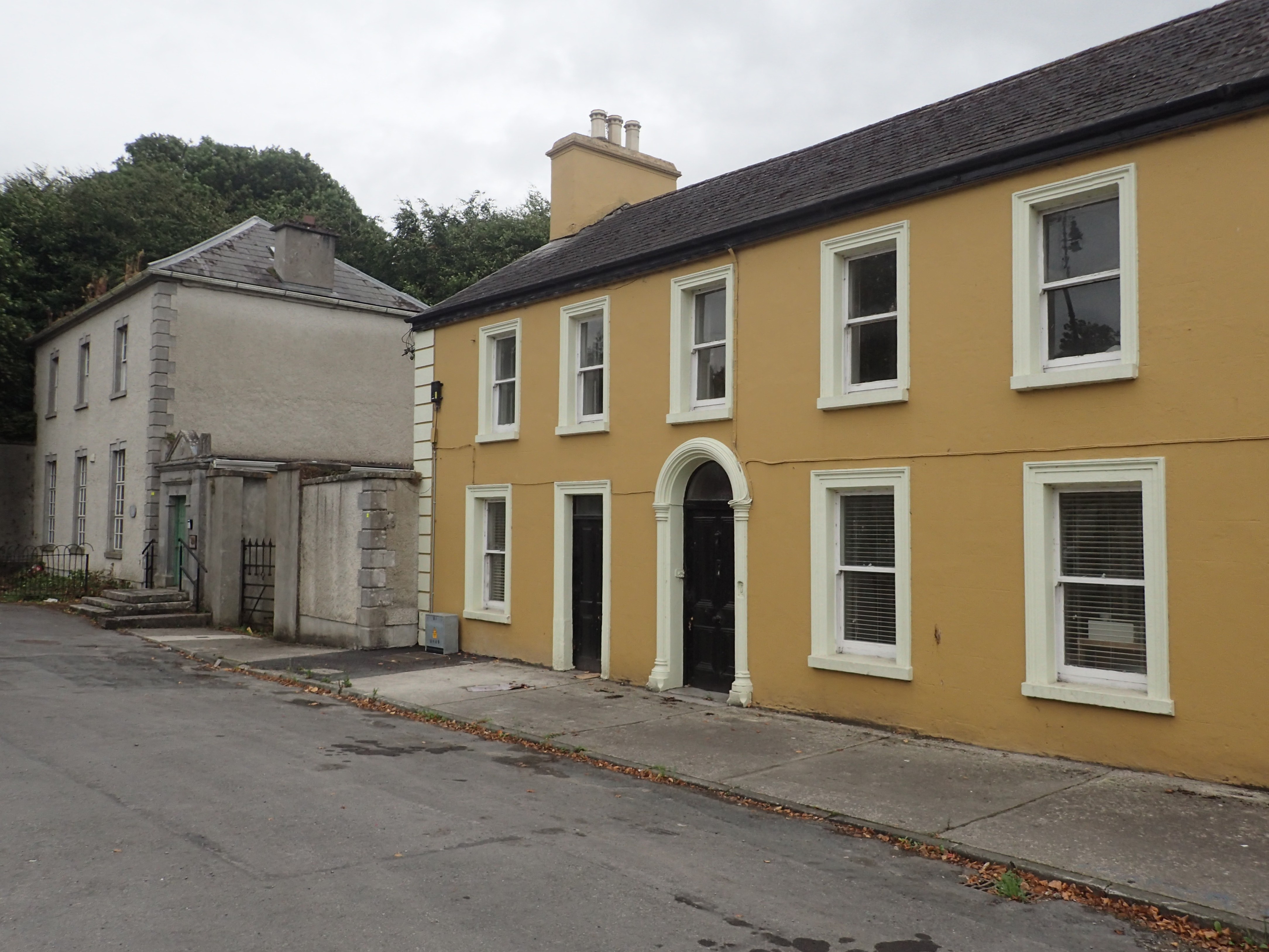
A town with a deliberate shape
Church Street and Bawn Street form an east–west axis, rising from the park entrance towards the church. Bridge Street and Elphin Street provide the crossing route. The regeneration study describes this formal arrangement against the surrounding drumlin landscape, and identifies the restrained, rendered fronts and slate roofs that give the streets their shared character (Sheridan Woods, 2025, p. 10).
The house itself developed in stages. The National Inventory of Architectural Heritage records an earlier house completed in 1696, followed by a substantial rebuilding under Thomas Mahon in the early eighteenth century. Its neo-Palladian design is attributed to Richard Castle: an attribution, rather than a certainty that should be quietly upgraded in the telling (NIAH, 2015).
That distinction matters in local history. A building can carry several periods at once. A neat date on a visitor’s sign may be useful, but it rarely tells the whole story of the fabric behind it.
Broad streets were not universally admired
Isaac Weld’s 1832 account measured the principal street at 49 yards across and the intersecting street at 21. Those are historical observations, not a survey of today’s carriageways. He admired the spacious effect but questioned how well the ground beside the central roadway was being used. His account places wheelwrights and coopers among those working in that open space (Weld, 1832, cited in Sheridan Woods, 2025, p. 8).
It is an appealingly practical disagreement. One observer sees grandeur; another asks what happens in the gaps. Weld’s judgement belongs to his period, but his description reminds us that these streets were working places, not simply an architectural composition.
A market connected to the wider region
Samuel Lewis’s 1837 account gives the town a different sort of movement. He describes a busy weekly market, with linen, yarn, flannel and food among the goods brought in. Grain linked the surrounding countryside to the mills of Sligo and to Richmond Harbour, where the Royal Canal offered an onward route towards Dublin (Lewis, 1837, cited in Sheridan Woods, 2025, p. 8).
Read that account and the relationship between town and hinterland becomes clearer. The streets were a meeting point for agricultural production, craft, transport and household needs. Strokestown’s history is therefore larger than the story of its most prominent house. It includes the people arriving with goods to sell, work to do and purchases to bring home.
The people behind the estate records
The surviving archive makes that wider history tangible. Strokestown Park describes records concerning tenants, cottiers, labourers, craftsmen and traders, alongside those who managed and owned the estate. Its collection also includes nineteenth-century glass-plate photographs. Famine-era papers remained in the house until Jim Callery discovered them in 1979; other estate papers had gone to the National Library in the late 1940s (Strokestown Park, n.d.).
The museum commemorates the 1,490 people forced to emigrate from Strokestown in 1847, whose journey is remembered through the National Famine Way. These are lives and losses to be understood in their own right, not picturesque background to an attractive streetscape (Strokestown Park, n.d.).
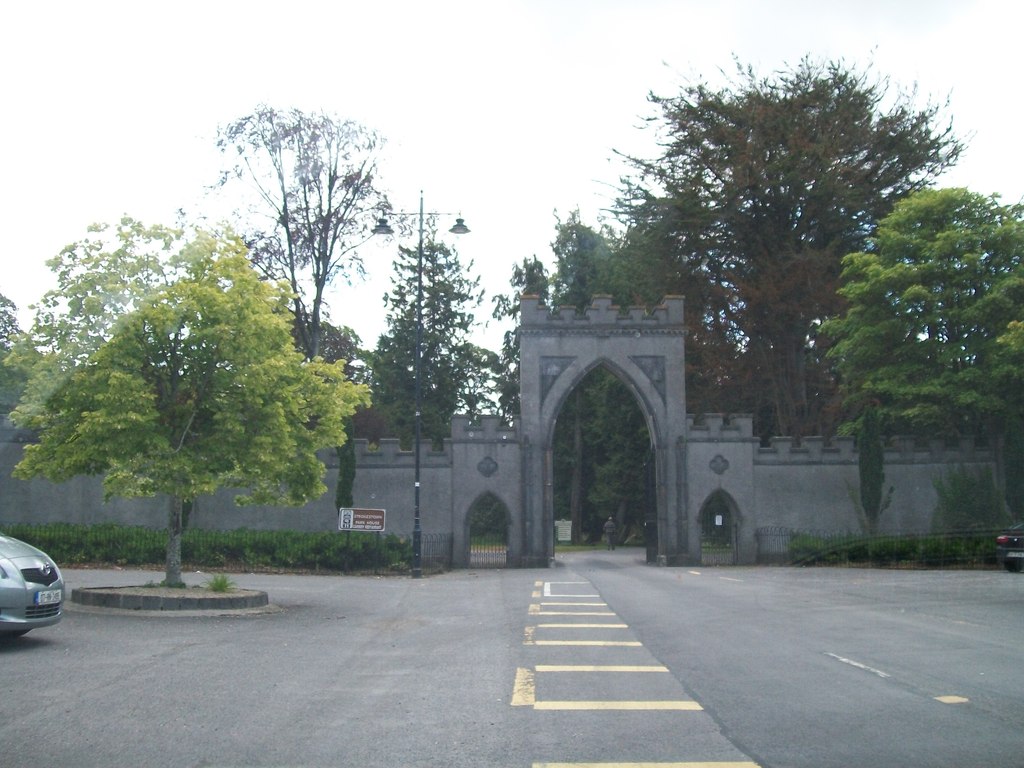
Reading the town today
One useful way to explore Strokestown is to notice how the buildings relate to the spaces between them: a gateway, a roofline, the point where a street rises, the contrast between a broad public frontage and a more enclosed area behind it. The regeneration study’s attention to backland entrances and the rhythm of the street fronts offers a helpful guide (Sheridan Woods, 2025, p. 10).
For anyone considering a move here, this history adds understanding rather than a price prediction. It explains why a modest frontage can contribute to a much larger townscape, and why changes deserve thought. The streets are not a finished museum exhibit. Their next chapter will be written by the people who live, work and spend time in them.
References
Download this article’s reference list ↓
Sheridan Woods Architects & Urban Planners (2025) Strokestown heritage led regeneration plan. Available at: Strokestown heritage led regeneration plan (Accessed: 3 November 2026).
Weld, I. (1832) Statistical survey of the County of Roscommon (extract reproduced in Sheridan Woods, 2025, p. 8; original volume not independently consulted). Available at: Statistical survey of the County of Roscommon (extract reproduced in Sheridan Woods, 2025, p. 8; original volume not independently consulted) (Accessed: 3 November 2026).
Lewis, S. (1837) A topographical dictionary of Ireland: Strokestown entry (extract reproduced in Sheridan Woods, 2025, p. 8; original volume not independently consulted). Available at: A topographical dictionary of Ireland: Strokestown entry (extract reproduced in Sheridan Woods, 2025, p. 8; original volume not independently consulted) (Accessed: 3 November 2026).
National Inventory of Architectural Heritage (2015) Building of the month, December: Strokestown Park House. Available at: Building of the month, December: Strokestown Park House (Accessed: 3 November 2026).
Strokestown Park (n.d.) Strokestown Park Archive. Available at: Strokestown Park Archive (Accessed: 3 November 2026).
General information for Irish property matters. The requirements of a particular instruction should be discussed with the appropriate professional. Editorial approach and source policy.
Keep exploring the area
Explore the Strokestown property guide